Sunday, 14 April 2013

Simple Business Ideas 2013


1. Translator:


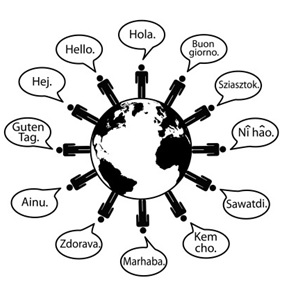
The global marketplace is growing and reaching beyond the borders. All that cross-cultural communication is creating a growing need for translators. It predicts a greater demand for interpreters and translators resulting from the broadening of international ties. The growth in the number of non-English speakers in the United States will result in a projected 22 percent increase in the number of individuals employed in this profession. This translates into a big business opportunity.

2. Employee-monitoring services


Employees are increasingly mobile. In fact, it is estimated there will be 1.3 billion mobile workers by 2015. This provides myriad business opportunities for entrepreneurs. A company that could provide employee-monitoring services, as well as some additional outsourced human resources functions, would be in great demand right now.


3. Business plan writer


There are multitudes of budding entrepreneurs out there all struggling to write a business plan. The problem is that many lack the experience necessary to put the document together. An entrepreneur with a background in business and good writing skills could start small and attract a few clients at a time.


4. Niche Web design


Every company needs a website. But, finding a Web designer who understands their particular business, their customers and their competition isn't as easy as one would think. Building a Web design business that focuses on one niche will help you corner the market in one or two particular industries.


5. Ghostwriting


A ghostwriter is a writer who writes books, articles, stories, reports, or other texts that are officially credited to another person. For example: Celebrities often hire ghostwriters to draft or edit autobiographies or other written material. Self-published books are all the rage among businesses trying to promote themselves online. But, not many small business owners are qualified to write an engaging book. That's where ghostwriting business comes in.

6. Green consulting


Environmental consulting is a form of compliance consulting in which the consultant ensures that the client maintains an appropriate measure of compliance with environment. Consulting is a new and growing area conducive to the innovative and entrepreneurial spirit of a small firm.


Article By
Karthikeyan
IInd MIB
PSGCAS

Friday, 12 April 2013

BRICS BANK


Leaders of the BRICS nations - Brazil, Russia, India, China and South Africa - made the decision to create the new BRICS bank at their meeting on 27th March 2013.
  
It is assumed that the present economic crisis has led to a great strengthening of the power of the World Bank and the IMF. The existing international financing institutions are largely dominated by the developed nations..BRICS  Bank will play a vital role in the developing nations economy which will significantly raise the GDP and the other economic factors of the nations that results in ultimate growth of the BRICS as the next super power nations.

This also increases the healthy competitive strategies between the developing and the developed nations. More the competitions are, more the growth occurs. It can be clearly believed that in the long term the bank could have a significant impact.


China holds vast foreign exchange reserves and is likely to be, in some manner or other, the dominant player in the BRICS bank. As the weakest BRICS member, South Africa may have the most to gain from establishing the bank.


BRICS bank could potentially be a lifeline for the difficulties faced by the countries such as poor infrastructure and so on. It is time the new international institutions become sensitive to the needs of the poorer countries.


The world does not need more non-transparent public institutions. Modern democratic funding criteria require that such a bank must help develop a healthy relationship between governments, civil society organizations and popular movements. The bank’s launch is not only a matter of economics. It also reflects a new political space thanks to the fragility of the US and Europe in the wake of the 2008-09 global financial crisis, which has revealed that so-called emergent economies have huge accumulated reserves, due to rising prices of raw materials and high demand in world markets.


It is therefore necessary to embrace the opportunity to create a new development bank that could make a real difference. Even though not all of the countries that will govern it have so far been central to global capitalism, overall they have promising qualities.


The time has come for civil society across the five BRICS countries to work preemptively and ensure the creation of a BRICS development bank that is not only another new mega financial institution, but also the best opportunity for the developing nations to be the developed nations very soon.


Article By
Annapoorani
IInd MIB
PSGCAS

AMBUSH MARKETING


The word ambush means “an attack from a hidden position “parasitic marketing –attached to a host and gets benefited. The term was coined by the famous marketing strategist Jerry Welsh.

A promotion tactic designed to associate a company, product, or service with a particular event, or to attract the attention of people attending the event, without payment being made for an official sponsorship.


The ambush consists of giving the impression to consumers that the ambusher is somehow affiliated with the event. Marketing strategies are usually combined with the use of words or imagery that will remind consumers of the famous event.


Ambush marketing is not just for the amateurs, it is also adopted by professional marketers

To get maximum returns on the marketing buck and to undermine the branding efforts of the rivals by stealing the attention, increasing the clutter and confusing the viewers

Ambush marketing is not only a smart marketing tactic but also a highly cost effective medium ambush marketing is a clever way to promote ambush marketing as one of the mix in your overall marketing strategy to a brand.


Examples:


 Ambush marketing was first witnessed in 1984 Olympics In 1996 Summer Olympics Games in Atlanta, Nike company covered the city in ads, benefiting from the focus on the city for the olympics., Pepsi also involved in ambush market in the same event XIX Commonwealth Games The Pepsi hot air balloon flying above Sharjah, on the day of the Coca-Cola Cup final.


In the examples described above, the ambushed company cannot avail of any specific legal remedy. The advertising campaign can only be considered an unfair trade practice, the remedy for enforcement of which is not very clear.


Healthy Competition, Successful ambush strategies feed on ill-conceived sponsorships and incompetent sponsors it is probably just the next step on the marketing evolutionary ladder and at times the only option left.


Article By
N. Kalaiprakash
Ist MIB
PSGCAS

It's Yuan Time!


We all know that China is peaking up in its economic conditions, but it is quite interesting to know that it has been trying to promote the Yuan as an alternative to the U.S. dollar, which has been the dominant global reserve currency since the 1944 Bretton Woods conference.
Currently, China represents
   ·         around 11 percent of global gross domestic product,
   ·         more than 10 percent of world trade and
   ·         nearly 9 percent of total foreign direct investment.

 It is a wonder to note that, of the currencies of the world’s six largest economies (USA, China, Japan, Germany, France, and United Kingdom) China’s Yuan is the only one that is not a reserve currency.
 
According to projections made in a recent report issued by the U.S. National Intelligence Council, China's economy is on the path of surpassing the U.S. in less than two decades. Now, the numbers tells the story clearly. Today, more than 10,000 financial institutions are doing business in Chinese Yuan, up from 900 in June 2011. The pool of offshore Yuan, non-existent three years ago, is now near 900 billion ($143 billion). And the proportion of China’s exports and imports settled in Yuan has increased nearly six fold in three years and is now nearly 12 percent. It is clear that more and more foreign enterprises that import goods from China choose to pay in Yuan, especially those in the emerging markets. The G3 – the EU, U.S. and Japan – have been China’s top trade partners for the past decade. But the emerging market share of China’s trade flows is rising steadily in line with changes in the global economic landscape. Currently the Yuan has surpassed the Russian ruble and Danish krone to become the world's 13th most-used currency for international payments.

According to Eswar Prasad and Lei (Sandy) Ye, authors of “The Yuan’s Role in the Global Monetary System,” there are three degrees of Yuan internationalization and it is been already happening !!
   1.      China and its trading partners have to transact in Yuan and it is been taking place since 2009.
   2.      According to HSBC, a third of China’s total trade will be settled in Yuan by 2015, making it one of the top-three global trade settlement currencies by volume.
   3.      The next step is for parties undertaking transactions unrelated to China to use the Yuan regularly.

To become a global currency requires “full convertibility”. HSBC economists forecast that China’s Yuan will become fully convertible within five years as the authorities seek to promote global use of the currency. For the currency to take the final step and become a global reserve currency, central banks around the world would have to maintain sizable holdings of Yuan as protection against balance of payments crises. In other words, the Yuan would become a so-called safe-haven currency. Researches has suggested that each 1 percentage point increase of GDP as a share of the world total (measured at actual exchange rate) leads to a 0.55 percentage point rise in central bank reserve holdings in the corresponding currency. Assuming the share of Chinese GDP to world GDP (at current prices and actual exchange rates) rises by 10 percent (taking into account the likely appreciation of the Yuan) over the next 10 years, this would suggest at least a 5.5 percentage point increase in central banks’ Yuan holdings. Hence, as long as China’s GDP growth stays above global growth, central bank reserves should increase their share of Yuan holdings, eventually making it an important reserve currency. Days are not far off for Rupee to become a reserve currency!!    

Article By
M. Aruna
Ist MIB
PSGCAS

Ideas to bridge up the Trade gap. If not you then who??


Balance of trade is the difference between the monetary value of exports and imports in an economy over a certain period of time. A positive balance of trade is known as a trade surplus and occurs when value of exports is higher than that of imports; a negative balance of trade is known as a trade deficit or a trade gap. India suffers from a trade deficit of 802.43 INR Billion in February of 2013. Balance of Trade in India is reported by the Ministry of Commerce and Industry. Historically, from 1978 until 2013, India’s Balance of Trade averaged -114.26 INR Billion reaching an all-time high of 13.91 INR Billion in April of 1991 and a record low of -1111.46 INR Billion in October of 2012.

India has been recording sustained trade deficits due to low exports base and high imports of coal and oil for its energy needs. These rising deficits are also due to increased foreign-currency borrowing that raises India’s vulnerability to international financial volatility. Wider trade deficits can also weaken the currency, raising domestic prices of imported commodities, further fueling India’s already high inflation rate.
The ever growing current account deficit and trade deficit is becoming a very serious issue, which is assuming massive proportions as a percentage of the Gross Domestic Product (GDP). It widened to a record high of 6.7 per cent of the GDP October-December quarter this fiscal 2012, the government appeared undaunted and asserted that it would take more measures to bridge the ‘large’ gap. Both the RBI and the government ensured that they will continue to monitor CAD. Here is few ways to bridge up the trade gap.

SUGGESTIONS TO BRIDGE THE WIDENING TRADE GAP

SUGGESTIONS TO THE GOVERNMENT

• GOVERNMENT’S CHECK OVER THE INCREASE IN GOLD IMPORTS


The worries arising out of trade deficit has its base in the Indian economy way back in the 1990s.In 1990, India had major foreign exchange problems and was on verge of default on external liabilities. The Indian Govt. pledged 40 tons gold from their reserves with the Bank of England and saved the day. Subsequently, India embarked upon the path of economic liberalization. The era of licensing was gradually dissolved. Gold import into India was permitted on payment of a duty of Rs.250 per ten grams. The government thought it more prudent to allow free imports and earn the taxes rather than to lose it all to unofficial channel. In 1991, India officially imported more than 110 tonnes of gold, which now stands about 800 tonnes in a year. Gold imports during April-Dec stood at $38 billion. The rising prices of gold, accounts for about 10% of India’s merchandise imports in 2012. These gold imports are causing a disruption to the balance of trade. Gold imports should be controlled by the government to avoid the increase in the deficit.

• GOVRNMENT'S STRONG SUPPORT TOWARDS THE FDI


            FDI is the type of investment that injects the foreign funds into an enterprise that operates in a different country of origin from the investor. Starting from a baseline of less than $1 billion in 1990, cumulative amount of FDI (from April 2000 to July 2012) into India is $ 176.76 billion, a recent UNCTAD survey projected India as the second most important FDI destination for transnational corporations during 2010–2012. Mauritius, Singapore, US and UK are the leading sources of FDI. Government can strongly support towards the entry and existence of Foreign Direct Investment in Country. The policies should be liberalised and favourable to FDI. This can bring in Foreign exchange. FDI also helps to solve social problems like unemployment, it has created upto 4 million new jobs in the previous years. Government can also take opportunity of learning the foreign technology that is not in existence in India.


Increase special incentives for exporters who establish their brands overseas so that India reaches out to the global market with her own products especially in areas like agriculture, where there is huge scope for branded processed food articles.


SUGGESTIONS TO EXPORTERS


• NET ADDITION TO PRODUCTS TO INCREASE EXPORTS


In order to run a surplus, the imports should comprise base materials and the extent of value added locally by intellect or labor or both, which would be the net addition. But India failed to make a net addition to its exports. India’s export of capital goods has been lukewarm and has also been on a downward trend. India imports raw diamonds and exports processed diamonds. It can instead build a brand and increase exports of branded jewellery studded with diamonds. India makes surplus grain production which is unfortunately allowed to rot in warehouses; it can instead process it and export the processed and branded food products to earn valuable foreign exchange.


The Government is already doing the better part in encouraging the organizations to export more. Exporters should also acknowledge these facilitating factors and utilize them in the right way.


SUGGESTIONS TO THE INDIAN BUSINESS PEOPLE


• INNOVATIVENESS IN THE BUSINESS MODEL/PRODUCTS


Innovativeness is not the introduction of entirely a new product. Businessmen can also make small innovations in bringing their products to the market. They can learn from the strategy of foreign companies and imitate the products in local market. This is as “Think Global and act Local”. The best example of this strategy is Vada Pav which is labelled as “Poor man’s burger”. The life of Vada Pav has seen many forms in every food joint. "Jumbo King” a retail food joint for branded Vada Pav in Mumbai, sells around 10,000 Vada Pavs each day which is just 10 % of total sales in Mumbai. Jumbo King has successfully adopted the model of McDonalds in India. Another good example is Balaji Chips which sells huge volumes and gives good competition to brands like Pringles. Balaji sells packaged potato chips and snacks.  It intends to pull way ahead of its competitors with its newly installed fully-automated Food-Tech Potato Processing Machinery. We should start focussing on reducing imports for domestic consumption. The spirit of Indian businessmen can be in introducing latest technologies with Indian inputs to save precious foreign exchange.


IDEAS FOR THE SOCIETY ( I suggest this is taken to the Government)


• INITIATIVE TOWARDS FINDING AN ALTERNATIVE SOURCE FOR OIL


India is deficient in domestic crude oil reserves, the ever-rising oil bill is perceived to be an uncontrollable factor. The rising prices of oil accounts for about 35% of India’s merchandise imports in 2012.


If oil continues to be an important and critical component of deficit, the level of seriousness may increase. Initiative should be taken to find alternative sources for oil; sources like hydro power, solar energy and wind energy are also advisable. The consumption of oil should be reduced and people should be made aware of the situation faced by the country. India cannot be said rich when poor travels in cars. It can become rich only when the rich takes the Public transport.


There are also numerous other ways for bridging up the Trade deficit. It is the responsibility of every citizen to help India to overcome and repay its borrowing from foreign countries. Citizens should not evade the duties and taxes for which they are liable to the Government. They must understand that these duties and taxes are levied for their own benefits and welfare.


SUGGESTIONS TO STUDENTS


Students can also contribute on their part by avoiding the use of imported brands and products which can help to decrease imports. We can use our own Indian brands and feel proud about our little contribution to our country. Students should shun International Brands which do not yield any value and use domestic brands. A new silent swadeshi movement to promote Indian brands may be a good idea. We should stage street plays all over India to communicate our ideas to our beloved citizens.


As students we can also educate the public about the trade deficit issues in the country. The social responsibility of students is greater than what we actually think. We can preplan our career in such a way we benefit the society. Students can take up entrepreneurship and come up with their own organizations. Why to be a job seeker? Think of becoming a job giver. Young minds can work more effectively and bring in more changes to the society. There should be favorable situation prevailing in the country with a trade surplus as soon as possible. We should start thinking bigger and different to further develop our nation.


Article  by
Dhanaranjani J
Ist MIB
PSGCAS